Greta Koch · 22 October 2026
Rural Connectivity Shortfalls Reshape Access Patterns for Humanities and Climate Research Programs Across Polish Campuses
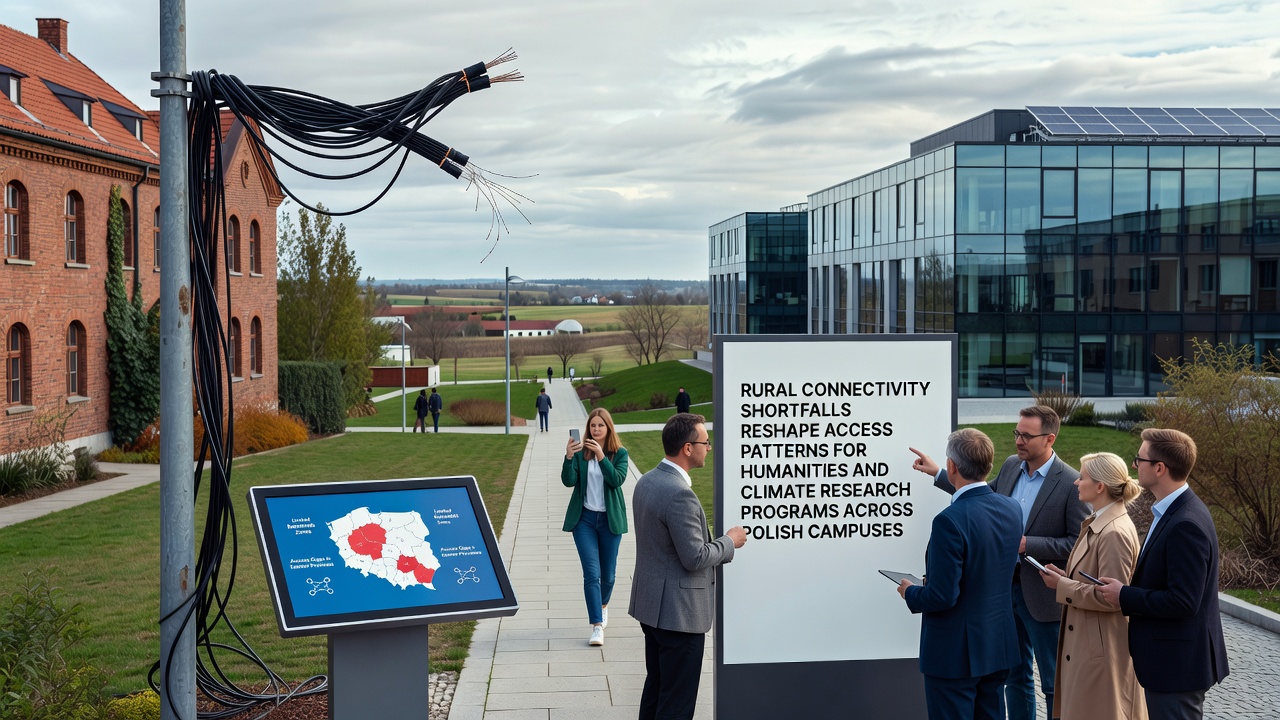
Polish universities have documented persistent gaps in rural broadband coverage that now influence how humanities scholars and climate researchers retrieve field data, coordinate with remote partners, and process large datasets from countryside locations. Government statistics compiled through 2025 indicate that approximately 28 percent of rural municipalities still operate below the 30 Mbps threshold set by the European Digital Agenda, while urban campuses maintain near-universal gigabit access. This disparity forces research teams to adjust schedules, relocate equipment, and sometimes abandon real-time analysis when working beyond city limits.
Current Infrastructure Landscape
National surveys conducted by the Ministry of Digital Affairs reveal that fiber-optic rollout in eastern and northern voivodeships lags behind central regions by an average of three years, leaving many villages served only by copper DSL or mobile networks prone to seasonal outages. Researchers who collect oral histories, conduct archaeological surveys, or monitor microclimate stations therefore encounter upload speeds that drop below 5 Mbps during peak agricultural hours, which delays the transfer of high-resolution imagery and sensor logs back to university servers in Kraków, Warsaw, or Poznań. Data from the European Commission's Digital Economy and Society Index shows Poland ranking 22nd among EU member states for rural fixed broadband penetration, a position that has remained largely unchanged since 2023 despite targeted subsidies.
Effects on Humanities Research Programs
Humanities departments at institutions such as the University of Warmia and Mazury and the University of Rzeszów report that fieldwork campaigns scheduled for autumn 2026 now incorporate buffer days specifically for data synchronization. Teams studying regional dialects, folk architecture, and post-war migration patterns rely on portable scanners and audio recorders whose files exceed 20 GB per session; when connectivity fails, these files remain stranded until researchers return to campus or locate a municipal library with better service. Observers note that collaborative projects with Baltic partners, which depend on shared digital repositories, have shifted from daily uploads to weekly batch transfers, extending project timelines by four to six weeks on average. One study released in September 2026 by the Polish Academy of Sciences tracked 47 humanities field teams and found that 61 percent altered their original sampling areas to stay within 15 kilometers of towns possessing at least 100 Mbps service.
Impacts on Climate Research Initiatives
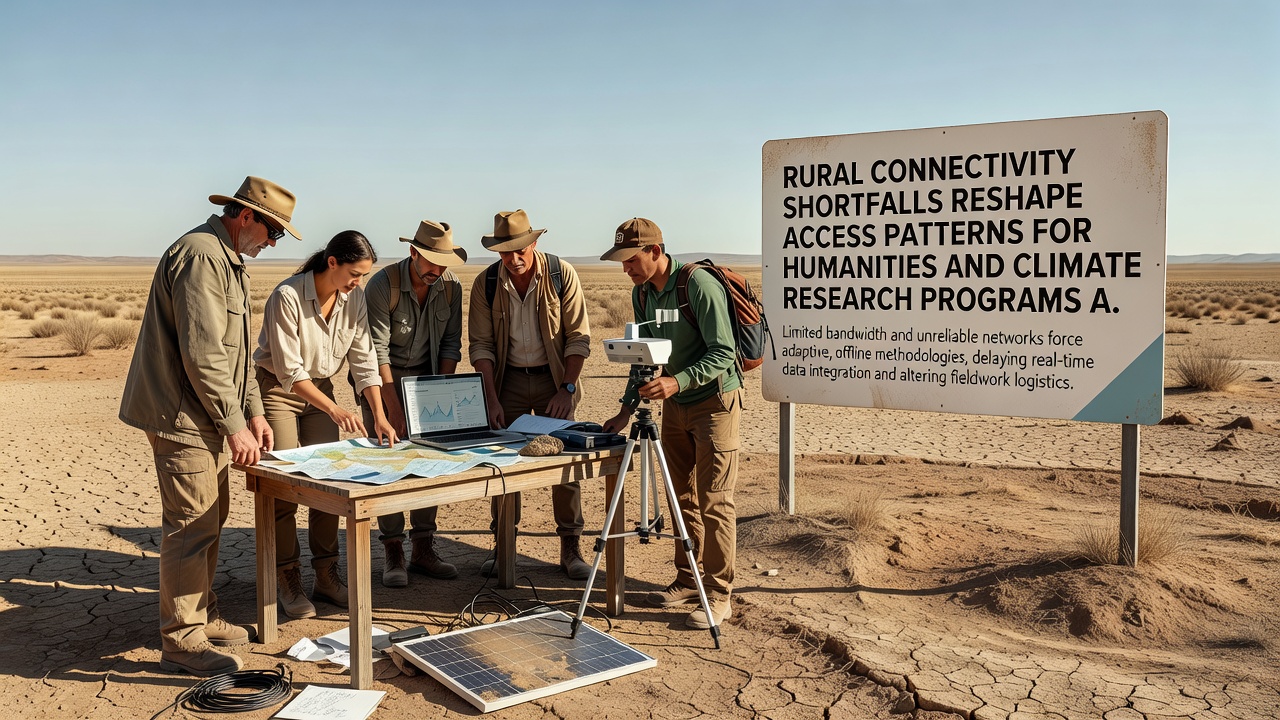
Climate programs face parallel constraints because continuous environmental sensors generate terabytes of atmospheric, soil, and hydrological readings that require near-real-time quality control. Stations deployed in the Biebrza Wetlands and the Sudetes foothills frequently lose satellite uplink during heavy precipitation, forcing teams to install local storage arrays and schedule physical retrievals every 10 to 14 days. According to figures released by the Institute of Meteorology and Water Management in October 2026, 34 percent of automated weather stations in rural Poland experienced at least one multi-day data gap during the preceding growing season, compromising models that track extreme rainfall events. Universities have responded by equipping graduate students with ruggedized laptops preloaded with edge-processing software so preliminary analysis can occur on-site before files move over constrained links.
Adaptation Strategies Across Campuses
Administrators at several universities have begun negotiating priority access agreements with regional internet providers and exploring low-earth-orbit satellite services as backup channels. The Jagiellonian University, for example, allocated 1.2 million PLN in 2025 to equip mobile research vans with dual-SIM routers that automatically switch between LTE and emerging 5G bands. Similar investments appear at the University of Gdańsk and Maria Curie-Skłodowska University, where climate and humanities groups now share equipment pools to reduce duplication of costly satellite terminals. Training workshops organized through the National Science Centre teach researchers how to compress datasets and use asynchronous transfer protocols, measures that have reduced failed upload attempts by roughly 40 percent in participating departments.
Policy Context and Funding Developments
EU cohesion funds earmarked for Poland's digital infrastructure include a 2026 tranche of 890 million euros specifically targeting rural last-mile connections, yet disbursement records indicate that only 37 percent of planned fiber routes in research-heavy voivodeships have reached the permitting stage. Parliamentary debates in Warsaw have centered on whether to accelerate permitting reforms or redirect a portion of these funds toward satellite and fixed-wireless alternatives. A joint report issued in October 2026 by the OECD and the Polish Ministry of Education and Science projects that full rural parity could arrive no earlier than 2031 under current rollout rates, a timeline that continues to shape grant applications and equipment budgets at universities nationwide.
Conclusion
Polish campuses continue to recalibrate research logistics around the uneven geography of digital access, with humanities and climate programs absorbing the clearest operational adjustments. As new fiber segments activate and satellite options mature, data collection patterns may stabilize, yet current evidence shows that connectivity shortfalls remain a measurable variable in project design and resource allocation across the country.