
Rafael Hughes · 10 September 2026
Polish Universities Forge New Student Exchange Models with Baltic Neighbors
Polish universities have expanded their student exchange frameworks with institutions across Estonia, Latvia, and Lithuania through a series of bilateral agreements signed in recent years, and these developments build on existing structures within the European Higher Education Area while introducing flexible credit transfer systems and joint degree pathways that address regional mobility challenges. Data from the Polish Ministry of Science and Higher Education shows participation rates in Baltic exchanges rose by 18 percent between 2022 and 2025, driven by streamlined visa processes and shared digital platforms for course enrollment.
Current Landscape of Regional Academic Mobility
Observers note that traditional Erasmus+ programs have long connected Polish campuses with Baltic counterparts, yet recent adjustments focus on semester-long immersions combined with short-term research placements that allow students to complete modular credits without full relocation. Researchers at the University of Warsaw documented how these hybrid models reduce administrative barriers for participants from smaller institutions in Lithuania and Latvia, where enrollment numbers in cross-border programs reached 2,450 students in the 2024-2025 academic year according to figures released by the Baltic University Programme secretariat.
Experts tracking these trends point to collaborative initiatives such as the Baltic-Polish Academic Network, which coordinates course equivalencies across eight Polish universities and six Baltic partners, and this network uses standardized learning outcome mappings that align with Bologna Process requirements while accommodating language support modules in Polish, Estonian, Latvian, and Lithuanian. One study from the European University Association highlighted how such alignments increased completion rates for exchange students by integrating virtual components that continue after physical stays conclude.
Innovative Exchange Structures Under Development
Administrators at institutions like the University of Gdańsk and the University of Tartu have piloted a dual-supervision model for master's students that pairs each participant with faculty from both home and host universities, and this approach facilitates joint thesis projects on topics including Baltic Sea environmental policy and regional economic integration. Records indicate the first cohort under this structure will finalize their programs in the spring of 2026, with results feeding into broader policy recommendations submitted to the Council of the Baltic Sea States.
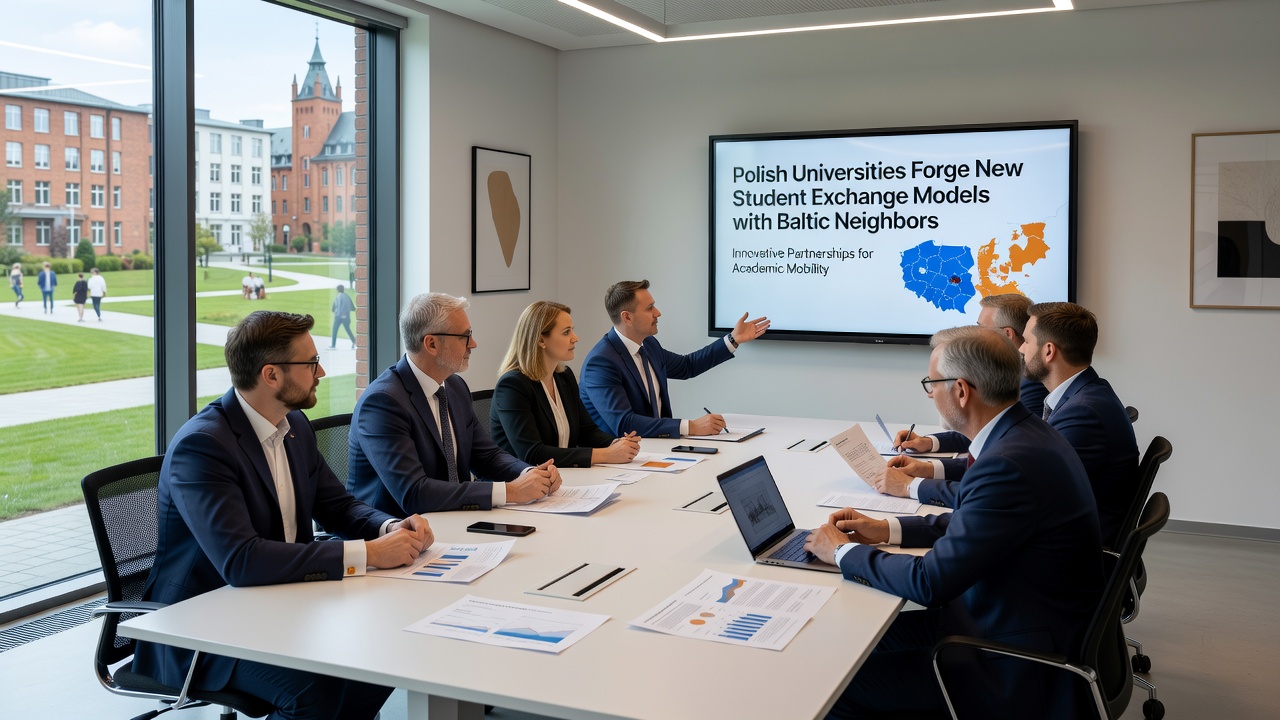
Those involved in program design have introduced micro-credential stacks that students accumulate across multiple Baltic institutions during successive short visits, and these credentials stack toward full degrees while allowing flexibility for working professionals who cannot commit to traditional semester schedules. Figures compiled by the Lithuanian Ministry of Education, Science and Sport reveal that 320 Polish students enrolled in such micro-credential pathways during 2025, a number projected to grow once digital verification systems link directly with national qualification frameworks in all four countries.
Role of September 2026 Program Launches
Planning documents shared among partner universities outline a coordinated rollout of new exchange cohorts scheduled to begin in September 2026, and these launches incorporate updated mobility funding formulas that blend national grants with private sector contributions from regional technology firms. The University of Latvia reports that its incoming Polish exchange slots for the 2026 autumn term have already filled to 85 percent capacity following targeted outreach campaigns conducted through joint virtual fairs earlier this year.
Coordination efforts also address housing and language preparation through shared residential partnerships in cities such as Riga, Tallinn, and Vilnius, where dedicated exchange dormitories now reserve blocks specifically for Polish-Baltic participants. According to updates from the Estonian Ministry of Education and Research, orientation programs starting in late August 2026 will include cultural integration modules that cover regional history and contemporary policy cooperation, preparing students for coursework that often addresses shared challenges like energy security and digital governance.
Supporting Data and Institutional Partnerships
Statistics released by the Polish National Agency for Academic Exchange indicate that funding allocated to Baltic exchange initiatives totaled 4.2 million euros in 2025, supporting both outbound Polish students and inbound participants from neighboring countries. Partnerships extend beyond flagship universities to include technical institutes such as Gdańsk University of Technology and Kaunas University of Technology, which focus exchanges on engineering and applied sciences fields that align with regional labor market demands.
One documented case involves a cohort of 45 students who completed a pilot rotation between the University of Białystok and Vilnius University in 2024, and follow-up surveys conducted by the participating departments showed 92 percent of participants secured related internships or graduate placements within six months of program completion. Such outcomes have encouraged additional institutions in Latvia to join the rotation framework ahead of the 2026 expansion.
Conclusion
These evolving exchange models reflect ongoing efforts by Polish and Baltic universities to strengthen regional academic ties through practical adjustments to credit systems, supervision structures, and funding mechanisms. Implementation continues with specific milestones set for September 2026, supported by data from national ministries and university networks that track participation and outcomes across the participating countries.